Showing posts with label Militarism. Show all posts

Tuesday, June 16, 2009

The Imperial Presidency


...let's not forget reality. Barack Obama did not win an election to be president of Goodwill Industries, or the YMCA, or the Ford Foundation. He may be remarkable in many ways, but he is also president of the United States which means that he is head honcho for the globe's single great garrison state which now, to a significant extent, lives off war and the preparations for future war.

So writes Tom Engelhardt over at TomDispatch.com. You would think this would go without saying, that the election of Barack Obama while an achievement does not dismantle the American Empire. But at times, it seems that as long as the guy crossing the Rubicon is a charming, charasmatic and good-natured person, many lose sight of this perspective.


Certainly those who hold the reins of power now aren't some neoconservative cabal with dreams of a Pax Americana. Yet neither are they willing to confront America's imperial ambitions. In fact, most Americans seem to believe in the notion of an "exceptional America"--that is fated, or destined, to run the world. Either that, or the rest of the world is supposed to work the way we want them to.

Sure you can elect who you want in your foreign country, but if we don't like him or her, we will levy sanctions, frame them as global pariahs and support (openly or covertly) their opposition.

Sure you're free to trade your own resources, but make sure we get it at a price that's beneficial to us--not your own people. And if you don't, democratically elected or not, you may get on our bad side.

It's wrong to kill innocent men and women to achieve your objectives--unless its one of our drones or airstrikes, which is just collateral damage.

And yeah, we have a right to spend more on military might than the rest of the world combined, with bases ringing the globe, but that's because the other people with far less weaponry is the real "threat."

That's the America Barack Obama inherited. Like the "one ring" the imperial presidency is filled with power and potential; but it's yet to be seen whether anyone can wield it for good rather than for ill.

Tom Engelhardt's full article here.

Read More...

Sunday, May 17, 2009

Powerful Quote of the Day


Citizens in a state of permanent war are bombarded with the insidious militarized language of power, fear and strength that mask an increasingly brittle reality. The corporations behind the doctrine of permanent war-who have corrupted Leon Trotsky's doctrine of permanent revolution-must keep us afraid. Fear stops us from objecting to government spending on a bloated military. Fear means we will not ask unpleasant questions of those in power. Fear means that we will be willing to give up our rights and liberties for security. Fear keeps us penned in like domesticated animals.


Wow. You think that's something, you should read the rest of Chris Hedges article The Disease of Permanent War.

A related video link below...


Read More...

Tuesday, June 3, 2008

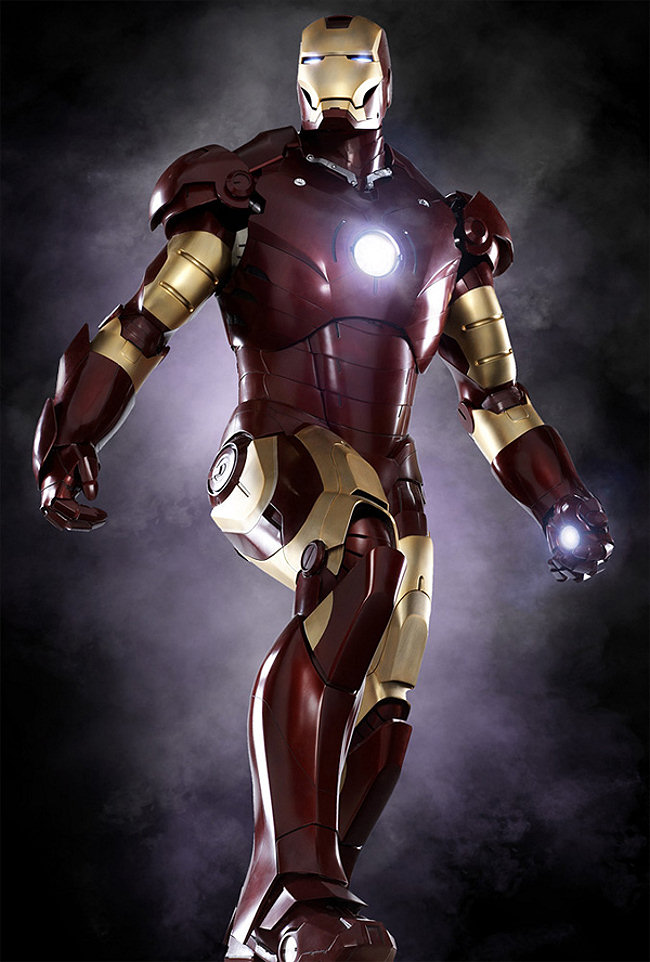
Militaristic Iron Man- The Pentagon & Hollywood


So during my month-long hiatus I did make it to the movies to see one of the first blockbusters of the summer- Iron Man. This was after a one-week boycott upon learning that Ghostface's cameo would be cut. Anyone familiar with the Wu phenom knows that he has long ago taken on the persona of the Marvel comic icon, and it would have been a treat to see him (not just a video) in the flick. Anyways, I walked out of the movie like many fans, giving it an overall "job well done." Robert Downey Jr. played an excellent Tony Starks, adding a bit of flamboyant hedonism to the heartless arms-dealer turned crusader. The storyline was well-paced out, allowing for the development of the character/hero rather than rushing into repetitive action scenes. The dialogue was even memorable--a far cry from that god-awful Ghostrider. And the special effects were cutting edge--couldn't have asked for better. But as usual, I found myself disturbed by more than a few things. As seems to have become the norm for summer blockbusters, Iron Man was an ode to American militarism. Much like I highlighed in my blog post about last summer's Transformers, this blockbuster looked as if the Pentagon was waging another propaganda war--like they did on the mainstream news media. The US military is prominently featured, with shiny machines of war and noble good guys. In fact, they're so good-hearted that they refrain from stopping an ongoing masscre by some "Islamo-fascist boogey men" in Afghanistan because civilians might get hurt in any air strikes--a policy the real life US military has hardly ever followed in any recent war. Though the story does offer a twist by which Starks shuns the weapons industry for its role in perpetuating war, rest assured its not the US Defense Department who's doing this, but a rogue corporate bad-guy--naturally. And how does Starks set about fighting this Military Industrial Complex? Why by building an even better war machine! And who does he use it on first? Why the Mid Eastern bad guys of course. As is often the case, I was immediately chided by fellow Marvel fans for "reading too much" into the movie. That's why I'm often glad when someone else does the "reading" for me.

Nick Turse, author of How the Military Invades Our Every Day Lives has written an excellent piece on this topic called Torturing Iron Man: The Strange Reversals of a Pentagon Blockbuste I post it fully below in agreement and vindication.


Torturing Iron Man

By Nick Turse

May 21, 2008

This article originally was published on TomDispatch.

http://www.tomdispatch.com/post/174934/nick_turse_irony_man

Nick Turse: The Pentagon does a star turn in Iron Man, and the summer blockbuster turns the realities of the war in Afganistan upside down. Will anyone notice?

Nicholas Turse

"Liberal Hollywood" is a favorite whipping-boy of right-wingers who suppose the town and its signature industry are ever at work undermining the US military. In reality, the military has been deeply involved with the film industry since the silent era. Today, however, the ad hoc arrangements of the past have been replaced by a full-scale one-stop shop, occupying a floor of a Los Angeles office building. There, the Army, Navy, Air Force, Marines, Coast Guard and the Department of Defense itself have established entertainment liaison offices to help ensure that Hollywood makes movies the military way.

What they have to trade, especially when it comes to blockbuster films, is access to high-tech, taxpayer funded, otherwise unavailable gear. What they get in return is usually the right to alter or shape scripts to suit their needs. If you want to see the fruits of this relationship in action, all you need to do is head down to your local multiplex. Chances are that Iron Man--the latest military-entertainment masterpiece--is playing on a couple of screens.

For the past three weeks, Iron Man--a film produced by its comic-book parent Marvel and distributed by Paramount Pictures--has cleaned up at the box office, taking in a staggering $222.5 million in the US and $428.5 million worldwide. The movie, which opened with "the tenth-biggest weekend box office performance of all time" and the second biggest for a non-sequel, has the added distinction of being the "best-reviewed movie of 2008 so far." For instance, in the New York Times, A.O. Scott called Iron Man "an unusually good superhero picture," while Roger Ebert wrote: "The world needs another comic book movie like it needs another Bush administration...[but] if we must have one more... Iron Man is a swell one to have." There has even been nascent Oscar buzz.

Robert Downey Jr. has been nearly universally praised for a winning performance as playboy-billionaire-merchant-of-death- genius-inventor Tony Stark, head of Stark Industries, a fictional version of Lockheed or Boeing. In the film, Stark travels to Afghanistan to showcase a new weapon of massive destruction to American military commanders occupying that country. On a Humvee journey through the Afghan backlands, his military convoy is caught up in a deadly ambush by al-Qaeda stand-ins, who capture him and promptly subject him to what Vice President Dick Cheney once dubbed "a dunk in the water," but used to be known as "the Water Torture." The object is to force him to build his Jericho weapons system, one of his "masterpieces of death," in their Tora Bora-like mountain cave complex.

As practically everyone in the world already knows, Stark instead builds a prototype metal super-suit and busts out of his cave of confinement, slaughtering his terrorist captors as he goes. Back in the US, a born-again Stark announces that his company needs to get out of the weapons game, claiming he has "more to offer the world than making things blow up." Yet what he proceeds to build is, of course, a souped-up model of the suit he designed in the Afghan cave. Back inside it, as Iron Man, he then uses it to "blow up" bad guys in Afghanistan, taking on the role of a kind of superhuman-rights vigilante. He even tangles with US forces in the skies over that occupied land, but when the Air Force's sleek, ultra-high-tech F-22A Raptors try to shoot him down, he refrains from using his awesome powers of invention to blow them away. This isn't the only free pass doled out to the US military in the film.

Just as America's wars in Iraq and Afghanistan continue to bring various Vietnam analogies to mind, Iron Man has its own Vietnam pedigree. Before Tony Stark landed in Afghanistan in 2008, he first lumbered forth in Vietnam in the 1960s. That was, of course, when he was still just the clunky hero of the comic book series on which the film is based. Marvel's metal man then battled that era's American enemies of choice: not Al Qaeda-style terrorists but communists in Southeast Asia.

Versions of the stereotypical evil Asians of Iron Man's comic book world would appear almost unaltered on the big screen in 1978 in another movie punctuated by gunfire and explosions that also garnered great reviews. The Deer Hunter, an epic of loss and horror in Vietnam, eventually took home four Academy Awards, including Best Picture honors. Then and since, however, the movie has been excoriated by antiwar critics for the way it turned history on its head in its use of reversed iconic images that seemingly placed all guilt for death and destruction in Vietnam on America's enemies.

Most famously, it appropriated a then-unforgettable Pulitzer prize-winning photo of Lt. Colonel Nguyen Ngoc Loan, South Vietnam's national police chief, executing an unarmed, bound prisoner during the Tet Offensive with a point-blank pistol shot to the head. In the film, however, it was the evil enemy which made American prisoners do the same to themselves as they were forced to play Russian Roulette for the amusement of their sadistic Vietnamese captors (something that had no basis in reality).

Iron Man is replete with such reversals, starting with the obvious fact that in Afghanistan it is Americans who have imprisoned captured members of Al Qaeda and the Taliban (as well as untold innocents) in exceedingly grim conditions, not vice-versa. It is they who, like Tony Stark, have been subjected to the Bush Administration's signature "harsh interrogation technique." While a few reviewers have offhandedly alluded to the eeriness of this screen choice, Iron Man has suffered no serious criticism for taking the imprisonment practices, and most infamous torture, of the Bush years and superimposing it onto America's favorite evildoers. Nor have critics generally thought to point out that while in the film the nefarious Obadiah Stane, Stark's right-hand man, is a double-dealing arms dealer who is selling high-tech weapons systems to the terrorists in Afghanistan (and trying to kill Stark as well), two decades ago the US government played just that role. For years, it sent advanced weapons systems--including Stinger missiles, one of the most high-tech weapons of that moment--to jihadis in Afghanistan so they could make war on one infidel superpower (the Soviet Union), before setting their sights on another (the United States). And while this took place way back in the 1980s, it shouldn't be too hard for film critics to recall--since it was lionized in last year's celebrated Tom Hanks's film, Charlie Wilson's War.

In the cinematic Marvel Universe, however, the US military, which runs the notorious prison at Bagram airbase in Afghanistan, where so many have been imprisoned, abused and, in some cases, have even died, receives a veritable get out of jail free card. And you don't need to look very closely to understand why--or why the sleek US aircraft in the film get a similar free pass from Iron Man, even when they attack him, or why terrorists and arms dealers take the fall for what the US has done in the real world.

If they didn't, you can be sure that Iron Man wouldn't be involved in a blue-skies ballet with F-22A Raptors in the movie's signature scene and that the filmmakers would never have been able to shoot at Edwards Air Force base--a prospect which could have all but grounded Iron Man, since, as director Jon Favreau put it, Edwards was "the best back lot you could ever have." Favreau, in fact, minced no words in his ardent praise for the way working with the Air Force gave him access to the "best stuff" and how filming on the base brought "a certain prestige to the film." Perhaps in exchange for the US Air Force's collaboration, there was an additional small return favor: Iron Man's confidant, sidekick, and military liaison, Lt. Col. James "Rhodey" Rhodes--another hero of the film--is now an Air Force man, not the Marine he was in the comic.

With the box office numbers holding steady and the announcement of sequels to come, the arrangement has obviously worked out well for Favreau, Marvel, Paramount--and the US Air Force. Before the movie was released, Master Sergeant Larry Belen, the superintendent of technical support for the Air Force Test Pilot School and one of many airmen who auditioned for a spot in the movie, outlined his motivation to aid the film: "I want people to walk away from this movie with a really good impression of the Air Force, like they got about the Navy seeing Top Gun."

Air Force Captain Christian Hodge, the Defense Department's project officer for Iron Man, may have put it best, however, when he predicted that the "Air Force is going to come off looking like rock stars." Maybe the Air Force hasn't hit the Top Gun-style jackpot with Iron Man, but there can be no question that, in an American world in which war-fighting doesn't exactly have the glitz of yesteryear, Iron Man is certainly a military triumph. As Chuck Vinch noted in a review published in the Air Force Times, "The script... will surely have the flyboy brass back at the Pentagon trading high fives--especially the scene in which Iron Man dogfights in the high clouds with two F-22 Raptors."

Coming on the heels of last year's military-aided mega-spectacular Transformers, the Pentagon is managing to keep a steady stream of pro-military blockbusters in front of young eyes during two dismally unsuccessful foreign occupations that grind on without end. In his Iron Man review, Roger Ebert called the pre-transformation Tony Stark "the embodiment of the military-industrial complex that President Eisenhower warned against in 1961--a financial superhero for whom war is good business, and whose business interests guarantee there will always be a market for war."

Here's the irony that Ebert missed: what Iron Man actually catches is the spirit of the successor "complex," which has leapt not only into the cinematic world of superheroes but also into the civilian sphere of our world. Today, almost everywhere you look, whether at the latest blockbuster on the big screen or what's on much smaller screens in your own home--likely made by a defense contractor like Sony, Samsung, Panasonic or Toshiba--you'll find the Pentagon or its corporate partners. In fact, from the companies that make your computer to those that produce your favorite soft drink, many of the products in your home are made by Defense Department contractors--and, if you look carefully, you don't even need the glowing eyes of an advanced "cybernetic helmet," like Iron Man's, to see them.


About Nick Turse

Nick Turse is the associate editor and research director of TomDispatch.com. He has written for the Los Angeles Times, the San Francisco Chronicle, Adbusters, The Nation and Tomdispatch.com. His first book, The Complex, an exploration of the new military-corporate complex in America, was recently published in the American Empire Project series by Metropolitan Books.

Read More...

Thursday, April 24, 2008

Our American Empire


Anyone who has read my blog posts probably has a good idea of my fears of American Empire--not that our country is in danger of developing one, but that it is already here. America has long been an empire, though one in ultimate denial. As historian Thomas Bender in his work Nation Among Nations details, America likes to think of itself as a country that never colonised--as if all those lands acquired in the bloody westward march to the Pacific Coast were empty of inhabitants. Since then we have seen multiple wars of aggression, the overthrow of democratic governments to further our interests and invasion after invasion. Today that Empire is as bloated as ever, a militaristic and neoliberal machine that believes in its inherent right--or destiny--to lead and dominate.

The video above is a graphic novel version of legendary historian's Howard Zinn's A People's History of American Empire. Peep it. An accompanying article is below by Zinn from TomDispatch.

Music on page can be paused by clicking on the Imeem box in the lower right.


Empire or Humanity?

What the Classroom Didn't Teach Me About the American Empire

By Howard Zinn, TomDispatch

With an occupying army waging war in Iraq and Afghanistan, with military bases and corporate bullying in every part of the world, there is hardly a question any more of the existence of an American Empire. Indeed, the once fervent denials have turned into a boastful, unashamed embrace of the idea.

However the very idea that the United States was an empire did not occur to me until after I finished my work as a bombardier with the Eighth Air Force in the Second World War, and came home. Even as I began to have second thoughts about the purity of the "Good War," even after being horrified by Hiroshima and Nagasaki, even after rethinking my own bombing of towns in Europe, I still did not put all that together in the context of an American "Empire."

I was conscious, like everyone, of the British Empire and the other imperial powers of Europe, but the United States was not seen in the same way. When, after the war, I went to college under the G.I. Bill of Rights and took courses in U.S. history, I usually found a chapter in the history texts called "The Age of Imperialism." It invariably referred to the Spanish-American War of 1898 and the conquest of the Philippines that followed. It seemed that American imperialism lasted only a relatively few years. There was no overarching view of U.S. expansion that might lead to the idea of a more far-ranging empire -- or period -- of "imperialism."

I recall the classroom map (labeled "Western Expansion") which presented the march across the continent as a natural, almost biological phenomenon. That huge acquisition of land called "The Louisiana Purchase" hinted at nothing but vacant land acquired. There was no sense that this territory had been occupied by hundreds of Indian tribes which would have to be annihilated or forced from their homes -- what we now call "ethnic cleansing" -- so that whites could settle the land, and later railroads could crisscross it, presaging "civilization" and its brutal discontents.

Neither the discussions of "Jacksonian democracy" in history courses, nor the popular book by Arthur Schlesinger Jr., The Age of Jackson, told me about the "Trail of Tears," the deadly forced march of "the five civilized tribes" westward from Georgia and Alabama across the Mississippi, leaving 4,000 dead in their wake. No treatment of the Civil War mentioned the Sand Creek massacre of hundreds of Indian villagers in Colorado just as "emancipation" was proclaimed for black people by Lincoln's administration.

That classroom map also had a section to the south and west labeled "Mexican Cession." This was a handy euphemism for the aggressive war against Mexico in 1846 in which the United States seized half of that country's land, giving us California and the great Southwest. The term "Manifest Destiny," used at that time, soon of course became more universal. On the eve of the Spanish-American War in 1898, the Washington Post saw beyond Cuba: "We are face to face with a strange destiny. The taste of Empire is in the mouth of the people even as the taste of blood in the jungle."

The violent march across the continent, and even the invasion of Cuba, appeared to be within a natural sphere of U.S. interest. After all, hadn't the Monroe Doctrine of 1823 declared the Western Hemisphere to be under our protection? But with hardly a pause after Cuba came the invasion of the Philippines, halfway around the world. The word "imperialism" now seemed a fitting one for U.S. actions. Indeed, that long, cruel war -- treated quickly and superficially in the history books -- gave rise to an Anti-Imperialist League, in which William James and Mark Twain were leading figures. But this was not something I learned in university either.

The "Sole Superpower" Comes into View

Reading outside the classroom, however, I began to fit the pieces of history into a larger mosaic. What at first had seemed like a purely passive foreign policy in the decade leading up to the First World War now appeared as a succession of violent interventions: the seizure of the Panama Canal zone from Colombia, a naval bombardment of the Mexican coast, the dispatch of the Marines to almost every country in Central America, occupying armies sent to Haiti and the Dominican Republic. As the much-decorated General Smedley Butler, who participated in many of those interventions, wrote later: "I was an errand boy for Wall Street."

At the very time I was learning this history -- the years after World War II -- the United States was becoming not just another imperial power, but the world's leading superpower. Determined to maintain and expand its monopoly on nuclear weapons, it was taking over remote islands in the Pacific, forcing the inhabitants to leave, and turning the islands into deadly playgrounds for more atomic tests.

In his memoir, No Place to Hide, Dr. David Bradley, who monitored radiation in those tests, described what was left behind as the testing teams went home: "[R]adioactivity, contamination, the wrecked island of Bikini and its sad-eyed patient exiles." The tests in the Pacific were followed, over the years, by more tests in the deserts of Utah and Nevada, more than a thousand tests in all.

When the war in Korea began in 1950, I was still studying history as a graduate student at Columbia University. Nothing in my classes prepared me to understand American policy in Asia. But I was reading I. F. Stone's Weekly. Stone was among the very few journalists who questioned the official justification for sending an army to Korea. It seemed clear to me then that it was not the invasion of South Korea by the North that prompted U.S. intervention, but the desire of the United States to have a firm foothold on the continent of Asia, especially now that the Communists were in power in China.

Years later, as the covert intervention in Vietnam grew into a massive and brutal military operation, the imperial designs of the United States became yet clearer to me. In 1967, I wrote a little book called Vietnam: The Logic of Withdrawal. By that time I was heavily involved in the movement against the war.

When I read the hundreds of pages of the Pentagon Papers entrusted to me by Daniel Ellsberg, what jumped out at me were the secret memos from the National Security Council. Explaining the U.S. interest in Southeast Asia, they spoke bluntly of the country's motives as a quest for "tin, rubber, oil."

Neither the desertions of soldiers in the Mexican War, nor the draft riots of the Civil War, not the anti-imperialist groups at the turn of the century, nor the strong opposition to World War I -- indeed no antiwar movement in the history of the nation reached the scale of the opposition to the war in Vietnam. At least part of that opposition rested on an understanding that more than Vietnam was at stake, that the brutal war in that tiny country was part of a grander imperial design.

Various interventions following the U.S. defeat in Vietnam seemed to reflect the desperate need of the still-reigning superpower -- even after the fall of its powerful rival, the Soviet Union -- to establish its dominance everywhere. Hence the invasion of Grenada in 1982, the bombing assault on Panama in 1989, the first Gulf war of 1991. Was George Bush Sr. heartsick over Saddam Hussein's seizure of Kuwait, or was he using that event as an opportunity to move U.S. power firmly into the coveted oil region of the Middle East? Given the history of the United States, given its obsession with Middle Eastern oil dating from Franklin Roosevelt's 1945 deal with King Abdul Aziz of Saudi Arabia, and the CIA's overthrow of the democratic Mossadeq government in Iran in 1953, it is not hard to decide that question.

Justifying Empire

The ruthless attacks of September 11th (as the official 9/11 Commission acknowledged) derived from fierce hatred of U.S. expansion in the Middle East and elsewhere. Even before that event, the Defense Department acknowledged, according to Chalmers Johnson's book The Sorrows of Empire, the existence of more than 700 American military bases outside of the United States.

Since that date, with the initiation of a "war on terrorism," many more bases have been established or expanded: in Kyrgyzstan, Afghanistan, the desert of Qatar, the Gulf of Oman, the Horn of Africa, and wherever else a compliant nation could be bribed or coerced.

When I was bombing cities in Germany, Hungary, Czechoslovakia, and France in the Second World War, the moral justification was so simple and clear as to be beyond discussion: We were saving the world from the evil of fascism. I was therefore startled to hear from a gunner on another crew -- what we had in common was that we both read books -- that he considered this "an imperialist war." Both sides, he said, were motivated by ambitions of control and conquest. We argued without resolving the issue. Ironically, tragically, not long after our discussion, this fellow was shot down and killed on a mission.

In wars, there is always a difference between the motives of the soldiers and the motives of the political leaders who send them into battle. My motive, like that of so many, was innocent of imperial ambition. It was to help defeat fascism and create a more decent world, free of aggression, militarism, and racism.

The motive of the U.S. establishment, understood by the aerial gunner I knew, was of a different nature. It was described early in 1941 by Henry Luce, multi-millionaire owner of Time, Life, and Fortune magazines, as the coming of "The American Century." The time had arrived, he said, for the United States "to exert upon the world the full impact of our influence, for such purposes as we see fit, and by such means as we see fit."

We can hardly ask for a more candid, blunter declaration of imperial design. It has been echoed in recent years by the intellectual handmaidens of the Bush administration, but with assurances that the motive of this "influence" is benign, that the "purposes" -- whether in Luce's formulation or more recent ones -- are noble, that this is an "imperialism lite." As George Bush said in his second inaugural address: "Spreading liberty around the world… is the calling of our time." The New York Times called that speech "striking for its idealism."

The American Empire has always been a bipartisan project -- Democrats and Republicans have taken turns extending it, extolling it, justifying it. President Woodrow Wilson told graduates of the Naval Academy in 1914 (the year he bombarded Mexico) that the U.S. used "her navy and her army... as the instruments of civilization, not as the instruments of aggression." And Bill Clinton, in 1992, told West Point graduates: "The values you learned here… will be able to spread throughout the country and throughout the world."

For the people of the United States, and indeed for people all over the world, those claims sooner or later are revealed to be false. The rhetoric, often persuasive on first hearing, soon becomes overwhelmed by horrors that can no longer be concealed: the bloody corpses of Iraq, the torn limbs of American GIs, the millions of families driven from their homes -- in the Middle East and in the Mississippi Delta.

Have not the justifications for empire, embedded in our culture, assaulting our good sense -- that war is necessary for security, that expansion is fundamental to civilization -- begun to lose their hold on our minds? Have we reached a point in history where we are ready to embrace a new way of living in the world, expanding not our military power, but our humanity?

Howard Zinn is the author of A People's History of the United States and Voices of a People's History of the United States, now being filmed for a major television documentary. His newest book is A People's History of American Empire, the story of America in the world, told in comics form, with Mike Konopacki and Paul Buhle in the American Empire Project book series. An animated video adapted from this essay with visuals from the comic book and voiceover by Viggo Mortensen, as well as a section of the book on Zinn's early life, can be viewed by clicking here. Zinn's website is HowardZinn.org.


Read More...